Make a donation to the Museum
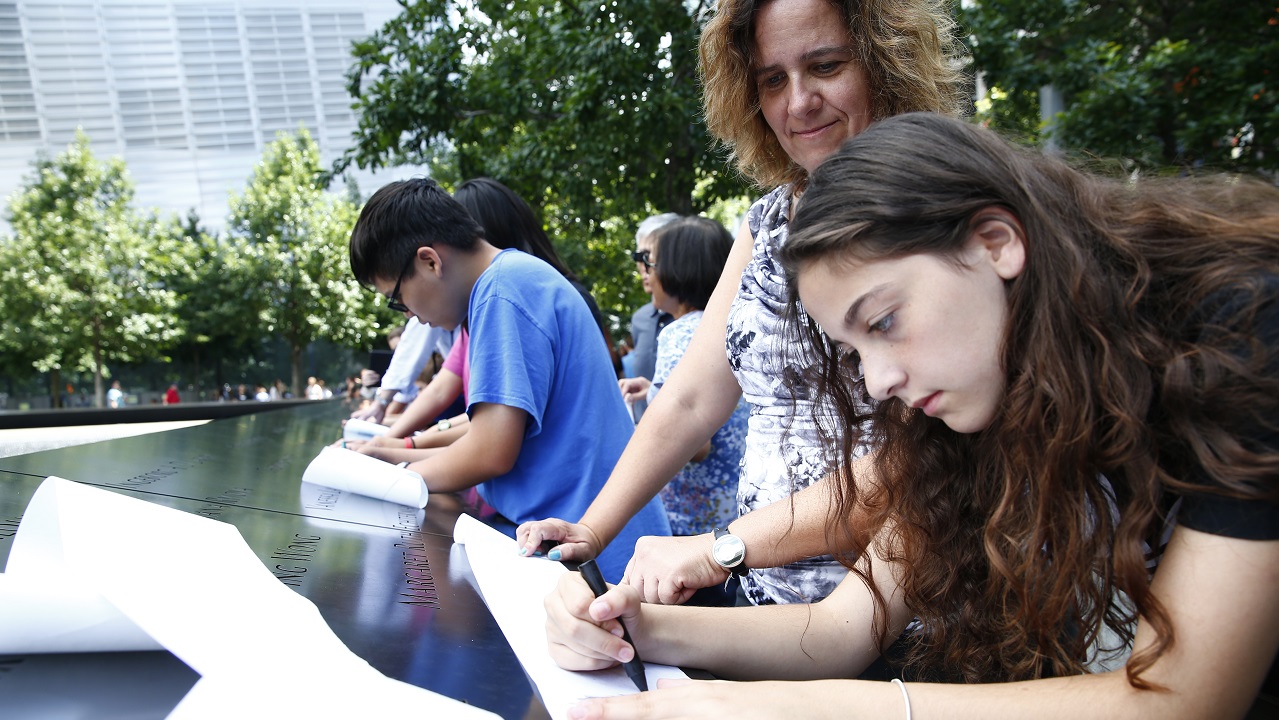
Photo by Jin S. Lee
Youth and Families
The 9/11 Memorial & Museum typically offers a variety of programs for visitors with children. All activities use age-appropriate language to help children learn more about 9/11 and how people responded to the attacks. Visit the events calendar for up-to-date program offerings.
Youth & Family Tour
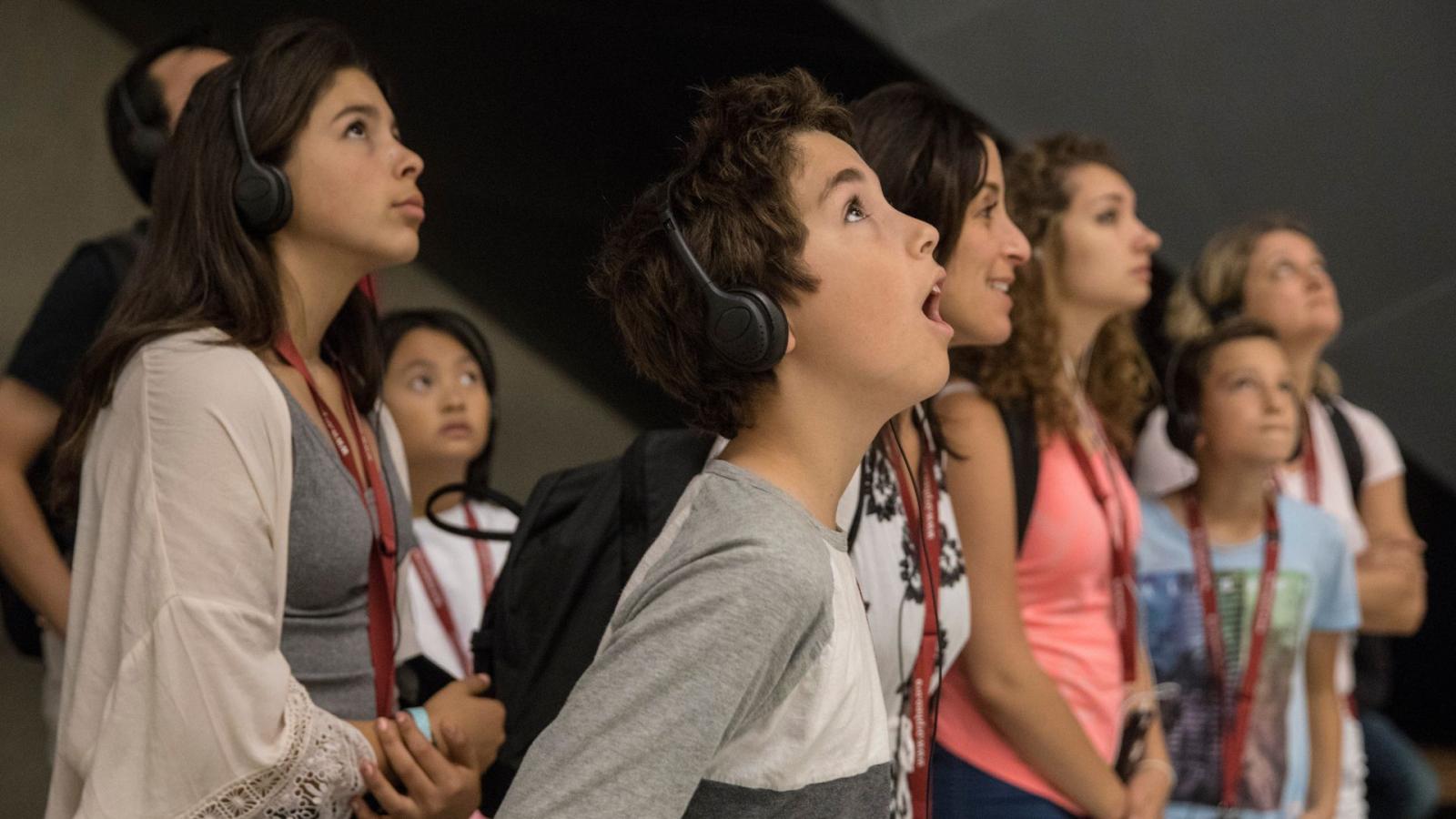
Join an educator on a 60-minute age-appropriate guided tour of the 9/11 Memorial & Museum. This interactive tour explores what happened on 9/11 and how people responded in the aftermath of the attacks, and includes an art activity honoring the lives of the victims. All tours are in English and led by our Education staff. Every child must be accompanied by an adult. Summer months only.
9/11 Memorial Art Cart
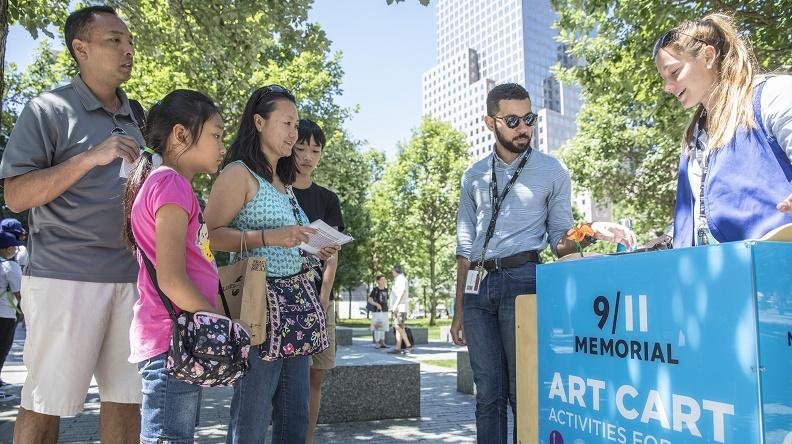
Photo by Jin. S. Lee
June 23-August 14
Tuesday-Friday, 10 a.m.-12 p.m. on the plaza
The 9/11 Memorial Art Cart offers free, family-friendly activities on the Memorial to help children discover the stories and symbolism behind the 9/11 Memorial and the rebuilt World Trade Center site. These engage visitors in discussions about the ongoing legacy and importance of 9/11. This program is free.
Activity Stations
June 23-August 13
Tuesday-Thursday, 2-4 p.m. in the Museum
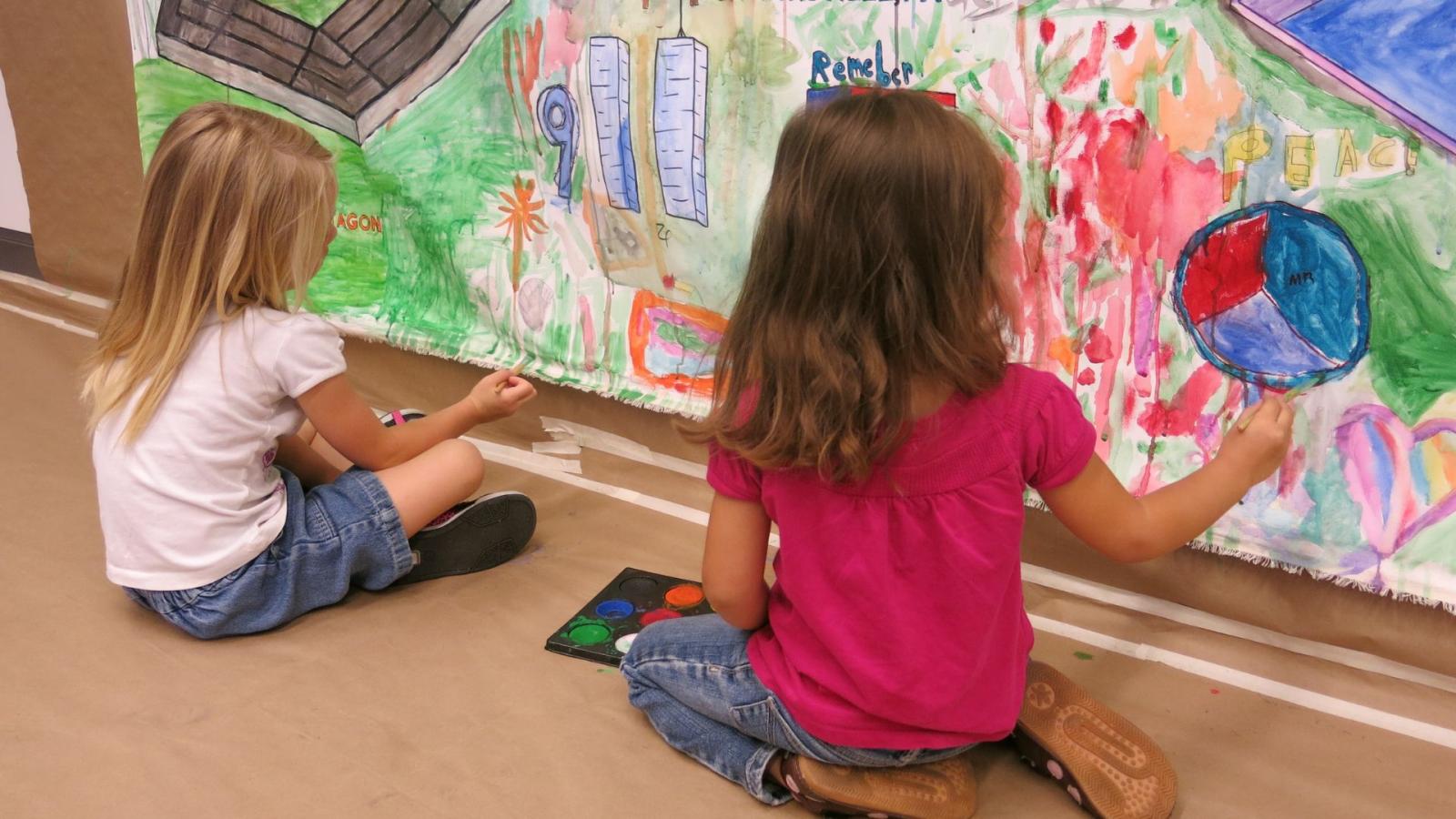
Visiting the Museum with kids? Join us for drop-in activity stations, which feature short art activities and explorations tied to specific artifacts and themes in the Museum. Meant to spark conversations between children and their guardians, our current activities offer age-appropriate entry points into the history of the World Trade Center, 9/11, and its aftermath. Activities are free with admission.
Activities at Home

Photo by Jin S. Lee
The 9/11 Memorial & Museum offers several activities that can teach your children about courage, compassion, resilience, and hope from home.
Talking to Children About 9/11

Photo by Jin S. Lee
Terrorist attacks and acts of violence in the United States and around the world evoke strong emotions and prompt understandable questions. Children might be feeling these emotions and considering these questions for the first time. The following tips have been prepared as broad guidelines to help parents and adult caregivers navigate these difficult conversations.